
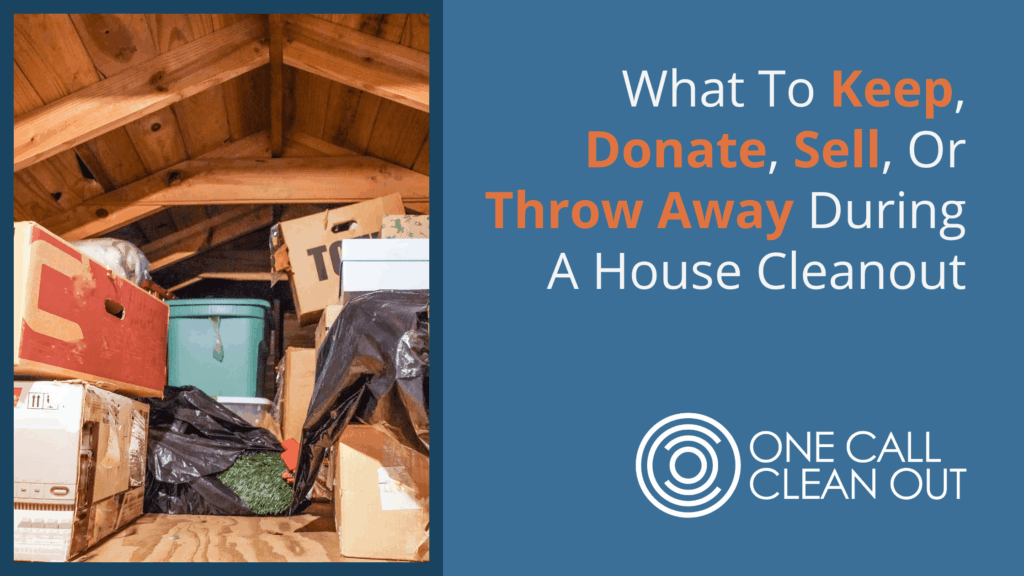
The biggest challenge in cleaning out a house is figuring out what to do with everything in it. Whether it’s a moving cleanout, an estate cleanout, or just an effort to de-clutter your home, deciding where each item should go is one of the most important parts of the process. When doing a cleanout, sorting through things can be a challenge for many homeowners, especially when there is a mix of everyday belongings, sentimental items, useful furniture, and things that are no longer needed. But a house cleanout is much easier to handle with the right system.
The best house cleanout tip is to break down your belongings into simple categories of where they need to go next. Breaking everything down into piles of keep, donate, sell, or throw away helps you break a big project into smaller decisions and have a clear plan once the sorting is completed. Instead of trying to clean out the whole house at once, you can go through it item by item and make consistent progress without feeling so overwhelmed.
Even if you know about this system, people often wonder how to decide what goes in which pile. So let’s dive in to what you want to keep, donate, or throw away for a home cleanout.
What to Keep During a House Cleanout
Frequently, the most difficult aspect of a home cleanout is deciding what to retain. It’s a good idea to start with everyday essentials that you and your family still use regularly. This includes clothing, toiletries, bedding, cooking utensils, cleaning supplies, work or school supplies, and other items that simplify everyday life. If you use it weekly or you’d have to replace it right away, it probably goes in the keep pile.
After that, concentrate on things that are important, valuable, and difficult to replace. They can be papers, family heirlooms, photo albums, jewelry, important records, or tools/appliances that are still useful. You might also want to hold on to furniture that still works for your home and lifestyle. When homeowners ask what to keep while decluttering a house, the simplest answer is to keep the things you use often, genuinely value, or would regret losing.
These categories make it easier to sort items in a cleanout and create momentum as you work your way through the house. Knowing what has to stay makes it a lot easier to know what can be donated, sold, or thrown away afterwards.
What to Donate When Cleaning Out a Home
If you have items that are still in good shape but no longer fit your space or aren’t needed anymore, donating is a great option. This can be gently used clothing, kitchen items, books, toys, small furniture, home décor, and other household goods that someone else can still use. If an item is in good condition, works well, and has lots of life left in it, it might be worth donating instead of throwing it away.
When deciding what to donate during your residential cleanout, ask yourself if someone else would be happy to have it. If the answer is yes, donation could be the right choice. Items donated during a residential cleanout can keep usable items out of the trash and in the hands of someone in your community that needs them.
What to Sell During a Residential Cleanout
It makes the most sense to sell the items that you no longer need but still have clear value and are worth the extra time and effort. This could be antiques, collectibles, quality furniture, tools, electronics, appliances, jewelry, or other items in good condition that people will likely pay for. If it’s worth something, in demand, and you don’t need to keep it, you might be able to recoup some money in the cleanout process.
That said, not everything is worth the effort of listing, storing, and coordinating with the buyer. One of the most helpful tips for a house cleanout is to be realistic about what is actually worth selling. If it has value and can sell without creating more stress, it may go in the sell pile. If not, it may be better to donate it or call a professional cleanout company to determine the best next step.
What to Throw Away During a House Cleanout
The throwaway pile should be for things that are broken, unsafe, heavily worn, expired, damaged, or not able to be used anymore. This could be stained furniture, broken decorations, out-of-date paperwork, damaged storage containers, unusable appliances, and other household junk that is no longer of any use. In general, if you can’t use it, donate it, or sell it in any realistic way, it’s time to toss it.
It’s important to know what to throw away during a house cleanout, as it helps keep clutter from following you into the next stage of life. Many people hold onto broken or low-value things for too long because they don’t want to make a bad decision, but part of the goal of cleaning out a home is to clear out the things that no longer contribute to the value of your space.
Need Help With Your Home Cleanout? Contact the Pros at One Call Cleanout
One of the best ways to make a cleanout feel manageable is to sort everything into keep, donate, sell, and throw away piles, but that doesn’t mean the process is easy. If you’re cleaning out a home and feel overwhelmed by the amount of stuff you have to sort through, One Call Clean Out is here to help.
Our team also assists homeowners with house cleanouts, junk removal, and full cleanout services that make it easier to get rid of unwanted items and reclaim your space. We can also assist you with identifying items that still have a donation or resale value so that you can cut down on waste and make the cleanout process easier from beginning to end. To learn more about our residential cleanout services, as well as our junk removal and dumpster rental services, contact One Call Clean Out today.